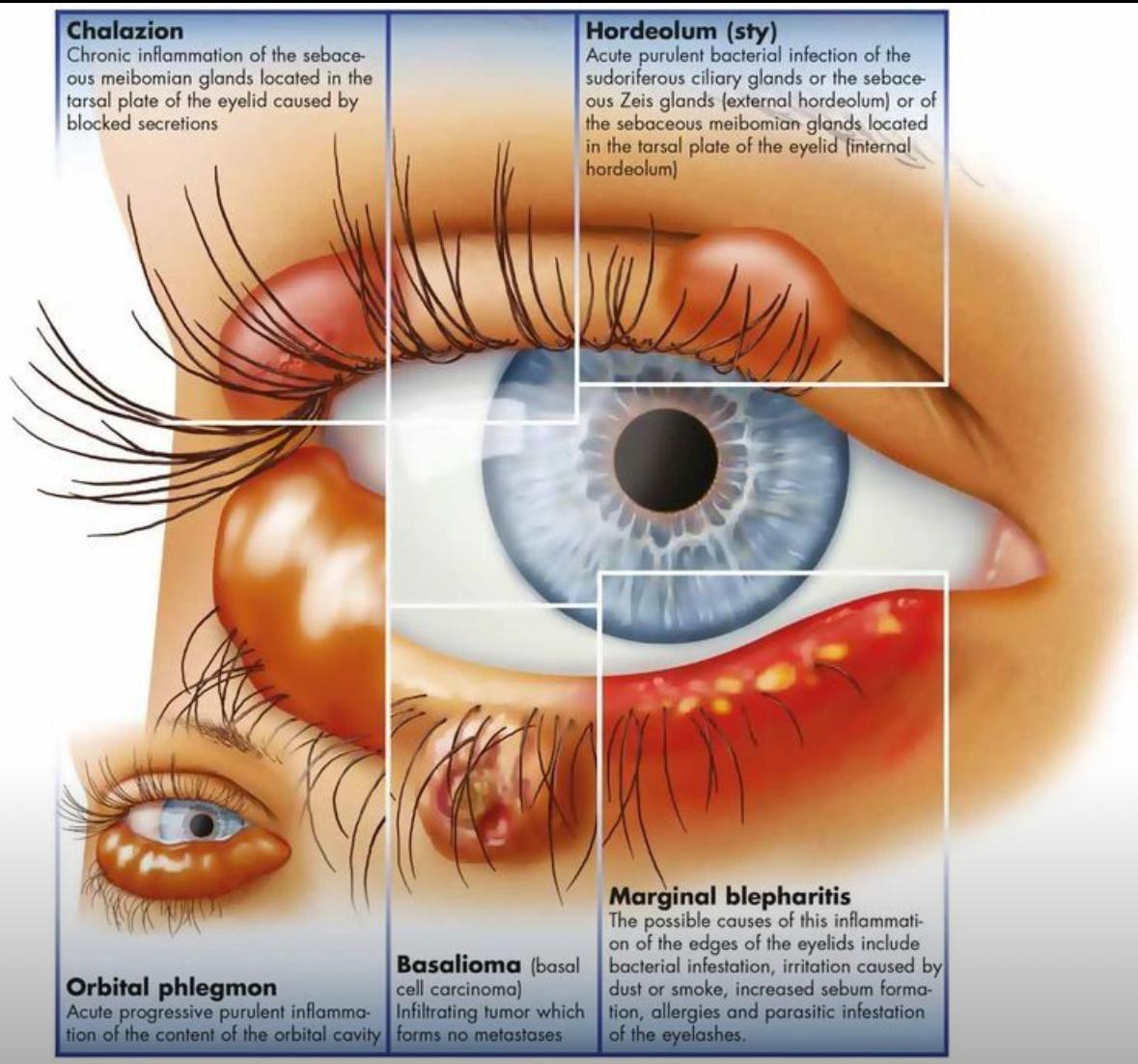
Eyelid Lumps and Bumps
The eyelids are delicate structures that protect the eyes while maintaining moisture and comfort. Occasionally, bumps or lumps can appear on the eyelids, causing discomfort, swelling, or aesthetic concern. These growths are common and, in most cases, benign (non-cancerous), though some may require medical evaluation to rule out infection or malignancy. Understanding their causes, symptoms, and treatment options is essential for maintaining eye health and comfort.
Common Types of Eyelid Bumps and Lumps
1. Stye (Hordeolum)
A stye is a red, painful lump that develops along the edge of the eyelid, resembling a pimple. It occurs when an oil gland or eyelash follicle becomes infected, often by Staphylococcus aureus bacteria.
Symptoms:
- Painful, tender swelling at the eyelid margin
- Redness and warmth around the area
- Watering or irritation of the eye
- Small yellow spot indicating pus formation
Treatment:
- Apply warm compresses several times a day to encourage drainage
- Maintain eyelid hygiene with gentle cleansing
- Avoid squeezing or popping the stye
- If persistent or recurrent, antibiotic ointments or drops may be prescribed by an ophthalmologist
2. Chalazion
A chalazion is a painless, firm lump that occurs when a meibomian gland (oil gland) becomes blocked. Unlike a stye, a chalazion is not caused by infection and usually appears away from the eyelid edge.
Symptoms:
- Localized swelling within the eyelid
- Mild tenderness initially, then a firm, painless lump
- Possible blurred vision if large enough to press against the eye
Treatment:
- Warm compresses help soften and drain the blocked oil
- Gentle eyelid massage can promote gland clearance
- Persistent chalazia may require steroid injection or minor surgical removal
3. Xanthelasma
Xanthelasma are yellowish, flat plaques that develop on the inner corners of the upper or lower eyelids. These fatty deposits are often harmless but may signal high cholesterol or lipid disorders.
Symptoms:
- Yellow, soft patches on the eyelid skin
- Usually painless and symmetrical
- May gradually enlarge over time
Treatment:
- Lipid profile testing to check cholesterol levels
- Cosmetic removal options include laser therapy, cryotherapy, or surgical excision
- Managing underlying cholesterol imbalance helps prevent recurrence
4. Cyst (Sebaceous or Inclusion Cyst)
A sebaceous cyst is a smooth, dome-shaped lump caused by a blocked oil duct. It is typically painless unless infected.
Symptoms:
- Round, movable bump under the eyelid skin
- May have a small central pore
- Can become red and sore if inflamed
Treatment:
- Small cysts may resolve spontaneously
- Warm compresses can promote drainage
- Persistent or infected cysts may be removed surgically
5. Papilloma (Skin Tag or Wart)
An eyelid papilloma is a benign skin growth that appears as a soft, flesh-colored or pigmented bump. It may be caused by aging or viral infections like human papillomavirus (HPV).
Symptoms:
- Painless, small growths on the eyelid margin or skin
- May be smooth, rough, or pedunculated (on a stalk)
- Can cause cosmetic concern or irritation
Treatment:
- Surgical excision, radiofrequency ablation, or laser removal
- Histopathological examination to rule out malignancy
6. Molluscum Contagiosum
A viral infection caused by the poxvirus, producing small, dome-shaped bumps with a central dimple.
Symptoms:
- Multiple small, waxy, white bumps
- Occasionally red or inflamed if irritated
- Can spread through touch or shared items
Treatment:
- Usually resolves naturally over months
- Cryotherapy or gentle surgical removal for persistent cases
7. Basal Cell Carcinoma (BCC)
While most eyelid lumps are benign, some may be cancerous, particularly basal cell carcinoma, which is the most common eyelid malignancy. BCC typically appears on the lower eyelid and grows slowly.
Symptoms:
- Pearly or ulcerated nodule with rolled edges
- Loss of eyelashes over the lesion
- Non-healing sore or recurrent bleeding area
Treatment:
- Surgical excision with margin control (Mohs surgery)
- Reconstructive surgery to restore eyelid function and appearance
- Early diagnosis ensures better outcomes
Diagnosis
Accurate diagnosis is crucial since different types of eyelid bumps may resemble one another. An ophthalmologist will:
- Conduct a clinical examination under magnification
- Assess for signs of infection, blockage, or malignancy
- Perform a biopsy in suspicious cases to confirm diagnosis
- Order additional investigations such as cholesterol testing or imaging when indicated
Preventive Measures
Maintain Eyelid Hygiene
- Clean eyelids regularly using mild baby shampoo or lid scrubs
- Remove eye makeup thoroughly before sleeping
Avoid Touching or Rubbing Eyes
- Dirty hands can introduce bacteria and worsen infections
Manage Skin and Lipid Conditions
- Treat acne, rosacea, or high cholesterol as advised by your doctor
Replace Old Cosmetics
- Discard old or contaminated makeup to reduce bacterial buildup
Regular Eye Checkups
- Early identification and management of eyelid abnormalities prevent complications
When to See a Doctor
Consult an ophthalmologist if you experience:
- Persistent or painful eyelid swelling
- Rapidly growing or ulcerated bump
- Changes in skin color or loss of eyelashes
- Recurrent styes or chalazia
- Distortion of eyelid shape
Prompt evaluation ensures accurate treatment and rules out serious conditions like eyelid cancer.